Menu
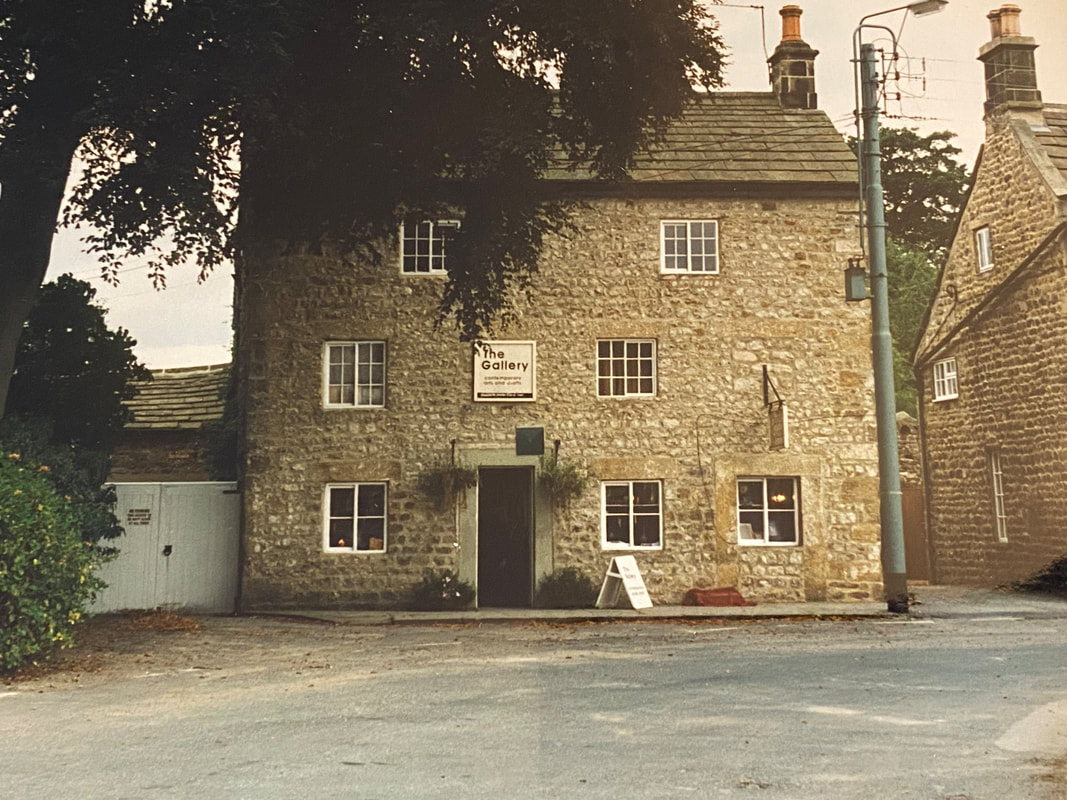
The Gallery, Masham
  • welcome
  • Shop
  • Exhibitions
    • Half Light
    • A Particular Place
    • The Romance of the Railways
    • Exhibition Archive
  • artists & makers
    • Paintings & Prints
    • Ceramics
    • Sculpture
    • Jewellery
    • Glass, Wood & Metal
    • Stationery & Paper
    • Textiles
    • Home & Interiors
    • Books
  • Opening Hours & Contact
  • About Us
  • Blog
  • welcome
  • Shop
  • Exhibitions
    • Half Light
    • A Particular Place
    • The Romance of the Railways
    • Exhibition Archive
  • artists & makers
    • Paintings & Prints
    • Ceramics
    • Sculpture
    • Jewellery
    • Glass, Wood & Metal
    • Stationery & Paper
    • Textiles
    • Home & Interiors
    • Books
  • Opening Hours & Contact
  • About Us
  • Blog

What This Artist Does All Day...

5/8/2025

0 Comments


Sarah Kirby

MG: When does your working day start and end?
SK: I’m an early riser … I’ve usually had the first cup of tea by 6am, but the work doesn’t often start before the first cup of coffee an hour or so later!

MG: When/how do you take breaks?
SK: It depends what I’m working on…which is usually more than one thing at a time. 
As a printmaker sometimes it’s obvious - ie: I get to a point in cutting where I want to take a proof to see what’s going on and then have a coffee while ‘contemplating’ results.
Sometimes it’s because my fingers have seized up (getting more frequent with age) and I need to change activity from cutting to drawing for instance.
Sometimes I come to an impasse - usually a point of indecision rather than displeasure, and need to do something different to let the idea take shape in my head …then I walk to the allotment or do chopping or weeding in the garden.
Sometimes the break is a reward - a self imposed deadline for a particular task for instance - get the drawing done on a piece of lino ready to start cutting and then I can make a coffee ! 


MG: What is your favourite kind of day as an artist?
SK: One without commitments, but one with purpose ie. an idea just starting - whether it’s starting the block or taking a trip to gather information and images for a new project.
The point when a piece of work is underway is always best.  There are nerves before starting and fears when coming to conclusions; but the middle bit is thrilling, full of promise and all encompassing.


MG: What marks a successful day?
SK: Starting or finishing a new piece of work.  Working all day on a new piece of work is what I love to do - any day doing that is successful.  Obviously it’s fabulous to be offered a show, or when someone buys  a piece of work … but the longer I do it, the act of doing is the only success that matters in the long run.


MG: How does the place you work influence you if at all?
SK: Always … I sit at a big window looking out at my garden. It’s a safe, quiet, peaceful, yet ever changing backdrop to thinking.  I live in a city but have privacy, space, light and lots of green outside.   I have Radio 4 on, and until very recently, a big beloved ginger cat at my side and try to remember how fortunate I am to be doing what I do.


MG: Where do you find inspiration?
SK: There really is inspiration everywhere … taking time to look  and draw never ceases to provide ideas and emotions.  I am drawn to being outside but an allotment or garden is equally amazing as a vast landscape. I like the connection I can find with a place; the mark of the human in the natural world.
Poetry also often inspires. My current obsession is Mary Oliver.


MG: When is your favourite time of day to create?
SK: The mornings are always best for me.  I have focus and energy for the creative stuff until the early afternoon. I tend to do the ‘admin’, the sorting , the wrapping of orders, the accounts etc in the afternoon if I have to!

MG: Does art help you in other areas of your life?
SK: It touches every part of my life. When everything or anything bad, sad or troubling happens I know I still have my meaning … being able to make keeps me getting up each day.  I tend towards the melancholy and try hard to see it as a positive trait when the rest of life makes me anxious or worried.  On a good day it gives me a belief and a necessary confidence for the other bits of living.

MG: What couldn’t you live without in your studio?
SK: A view / a table!!!  


MG: Do you have the opportunity to mentor or share your skills with young or new artists?
SK: I am a member of an Open Access Print Workshop in Leicester. Sometimes if I need more space I will print my linocut editions there. It’s a lovely environment where all sorts of printmakers also work in the space. I love sharing my process and talking around what I’m doing. To have someone else interested and being able to share is a privilege.
Thank you Sarah. You can see Sarah's work she has created especially inspired by Masham in A Particular Place exhibition


A Particular Place
Charlotte Morrison
Picture
Charlotte is a ceramicist from the Yorkshire Dales and works from her home near Masham.  She makes hand built ceramics using porcelain & stoneware clays, to create both functional and decorative items. She uses slab building and slip casting methods, before glazing and applying textures and patterns to her work by hand. These time-consuming methods mean that every single piece of Charlotte's work is unique. The inspiration for her work comes from items she collects, nature & the surrounding landscape. She transfers what she sees and collects into imagery & pattern to decorate her ceramics.

MG: When and how does your working day start?
CM: I’m not a morning person but I always push myself to be in the studio around 9. I certainly prefer working in the afternoon and evening. I must always start the day with a good cuppa tea or two. ​ 

MG: When/how do you take breaks?
​CM: Regular tea breaks through the day and, if I've got time, I like to head out in the morning for a walk to start the day. 
MG: When is your favourite time of day to create?
​CM: Afternoons and evenings I feel most creative. As I'm not a morning person I find it takes me till then to wind up into the day and feel I'm most productive and creative then. 
Meadow Bowl by Charlotte Morrison
Leaf Vases by Charlotte Morrison
'The Ruin' Vessel Set by Charlotte Morrison
MG: Does your daily rhythm change with the seasons?
​CM: Yes, early on in the year is a restful, but creative, time after the busy Christmas period. Late spring is a hive of activity in the studio preparing for shows starting in late Spring/Summer.  This generally continues through until winter and only calms again come December. 
MG: What makes a good day?
​CM: Handbuilding around 15 -20 pots. A good glaze firing with not too many cracked pots or seconds. 
MG: What couldn’t you live without in your studio?
​CM: The basics for me that I couldn't live without would be porcelain clay and my trusty oversized rolling pin. 
MG: Where do you find inspiration?
​CM: I find inspiration from nature and landscape around me, places like Hackfall Woods. 
MG:How does the place you work in influence you, if at all? 
​CM: I work from my garage and home, a little place in Aiskew near Bedale. It has a small but delightful garden which backs onto peaceful fields and a group of trees used as a rookery. The feeling of bine enclosed by nature and not overlooked by houses is very important to me and comes through in my work. For example, the Rookery set I make is inspired by the trees around my current home and my meadow pattern pieces are inspired by the fields around my childhood home near Masham.
MG: How do you end your day?
​CM: Gardening, walking or a glass of something, or perhaps another cuppa tea.
MG: Thank you very much Charlotte for sharing your day with us.

You can check out Charlotte's work in our A Particular Place Exhibition.
Charlotte's work for sale
A Particular Place Exhibition
0 Comments

What This Artist Does All Day...

25/7/2025

0 Comments

 
Liz Harvey
Picture
We are delighted to share the latest instalment in our "What This Artist Does in a Day' series, feating Liz Harvey -  one of ten artists in our summer exhibition, A Particular Place.

Liz specialises in drawing and painting, with a deep connection to the landscapes and seasonal changes that surround her. Trees are a constant presence in her work, capturing subtle transitions from the delicate blossoms of spring to the rich hues of autumn.  We caught up with her to discover how she approaches her practice.
MG:  When does your working day start and end?
​LH: The day always starts early at the studio. I check in with work in progress, reviewing plans and pieces (I often have several pieces of work on the go at once as I tend to work in series), or prepare to teach. I run courses from my studio and have regular groups, which I find really rewarding.  I do make sure I carve out plenty of painting time as well though. The day ends late, with more painting, planning and drawing.
MG:  What is your favourite kind of day as an artist?
​LH: Bright, crisp days at the studio are an absolute delight. My studio is in a beautiful area between Grewelthorpe and Mickley, surrounded by farmland, with extensive views, so just getting there and being surrounded by the space and light is inspiring. The best days are the days when paintings are underway and the ideas are bubbling. I often work in series on a specific theme or place. This allows me to explore ideas in depth so my favourite days definitely include both working on sustained oil paintings and emerging mixed media sketches which form the starting points of my work. 
There is always a good supply of morning coffee and afternoon tea on my favourite days too!
MG: What marks a successful day?
​LH: Any day which involves painting or drawing. 
Autumn View, Hackfall, Small Extended View by Liz Harvey
Hackfall High View by Liz Harvey
MG: How does the place you work influence you if at all?
​LH: There is plenty of light and space in my studio and incredible views, so these have a huge influence on my work. My studio is also a teaching space where I lead courses and workshops.  It has been essential that I have my own dedicated working space within the studio. I think this was the biggest factor in my development as an artist whilst I worked full time. Initially that place was a table in a spare room - and that was enough to convince me I wanted to just keep creating more art.  Moving into my current studio and now working as an artist full time,  has had the most incredible impact on how I work, the scale at which I can work and the way I work, often with multiple paintings being produced at the same time. 
Picture
Liz Harvey's spacious studio
MG: Who are your biggest artistic influences?
​LH: They are many and varied, and have definitely changed throughout my artistic journey as I have moved from pure abstraction into abstractions from observations. Robert Ryman, Richard Diebenkorn and David Hockney have all had an impact on how I approach my work. But there are many others I look to as well - often for different reasons. I think it is important to look at the work of others.  I studied History of Art alongside Fine Art at university so I am fascinated by artists’ work and it is using their ideas to inform my work, not working in their styles, that is most important to me. 
MG: Where do you find inspiration?
​LH: Since moving to Yorkshire a couple of years ago, my inspiration is all around me! I am really enjoying finding new places and spaces to explore and investigate. The local landscapes around the studio provide much of the influence for my current work - the places where I spend time . I teach at Old Sleningford Hall and the opportunity to work in the gardens there has had a huge impact on my work. They are so beautiful and inspiring. 
Hackfall, Large extended view by Liz Harvey
Hackfall High View by Liz Harvey
MG: When is your favourite time of day to create?
​LH: Mornings / afternoons - don’t mind really just as long as I have time.  With tutoring commitments, I need to be flexible and I am pretty good at finding the time! 
MG: How do you define success as an artist?
​LH: Success for me  is in the creating of works that both challenge  and find  resolution. There is a wonderful satisfaction in creating an artwork that feels balanced and complete - I love that moment when it just all comes together. For me success as an artist is being one - that is enough. It is a huge privilege to spend my time creating, making and sharing my art - that is success. 
MG: Does art help you in other areas of your life?
​LH: It fuels me - it genuinely makes everyday better and is essential to my own wellbeing.  This impacts how I can deal with other aspects of life. I have recognised how calm and happy I am since moving to Yorkshire and working full time as an artist following a long and happy teaching career. Art brings me calmness and joy - that helps in so many ways. 
PictureLiz's light-filled studio
MG: Do you have the opportunity to mentor or share your skills with young or new artists?
​LH: I trained as an art teacher and worked in schools in the UK and internationally for nearly 30 years as an art teacher, head of art and director of art.  It was a joy to teach so many young people throughout my career and to make sure art was an essential part of education of my students.  I thoroughly enjoyed teaching in schools but just wanted more time for my own work so moved up to Yorkshire and established my studio - which is very much a teaching studio. I now teach adults and that has been a revelation, in terms of how much I genuinely love teaching them. My approach is very much about personal tuition and guidance and helping people find their artistic voice and realise their intentions. I am also passionate about helping people develop an understanding of how to create meaningful works of art  and how the process is the most important part of the journey, enabling them to think and make decisions about their work. 

Picture
Thank you very much for sharing your work life with us Liz.
You can check out Liz’s working our summer exhibition, A Particular Place.
​


A Particular Place Exhibition
0 Comments

What This Artist Does All Day...

22/7/2025

0 Comments


Pam Grimmond

Picture
We are back this month with a bonus edition of 'What This Artist Does All Day' to shine a spotlight on another fantastic artist from our current A Particular Place exhibition, which runs until September 8th. This time we step into the daily world of Pam Grimmond, a North Yorkshire based printmaker whose intricate linocuts draw on the quiet details of everyday life - birds, buildings and the landscapes she walks through daily.


MG: When does your working day start and end?
PG: My first thought when I saw this question is that it’s not a 9 – 5 job! Then I remembered a quote I’d seen recently about being an artist is part of your identity, rather than simply your profession, and I thought, Yes, it’s who I am as much as what I do! So, in a way, what I’m trying to do is to define my working day. I’m thinking about my work all the time but the nitty gritty bit comes when I’m actually sitting at my desk upstairs in my studio, drawing or cutting a block ready for printing, or else downstairs at my printing press, actually printing!

MG: What is your favourite kind of day as an artist?
PG: I love printing. This takes some working up to: first I have to have the blocks ready to go, then there’s choosing and cutting the paper/s. I then prepare the press, ie. getting the registration ready, and finally, choosing and rolling out the different colours and so on, until the fabulous moment of removing the paper from the block to see what is there. Then there’s a whole new set of problems to think through! I’m totally working in the moment when I’m doing all this The mind can go off on a tangent of its own, planning and plotting other avenues to explore.
'Mistle Thrush', linocut by Pam Grimmond
'Pied wagtail', Linocut by Pam Grimmond
'Bullfinches', Linocut by Pam Grimmond
MG: How does the place you work influence you if at all?
PG: I’m lucky enough to have an old one up, one down outbuilding in our garden which I use as my studio. It’s also a utility room and there’s a bed settee upstairs, where my sister sleeps when she comes to stay in August. I love the peaceful atmosphere of my studio but especially in the Summer months when it’s warm and doesn’t actually need heating. Downstairs it’s always cool, except on the hottest days, but the double doors open onto the garden so I’m glancing out and seeing the flowers and hearing the birds. Obviously in Winter it can be quite difficult because the lino is hard and the ink takes quite a lot of rolling out. No one bothers me here as there’s a ladder to climb so people aren’t passing through. I like to have it quiet but sometimes I’ll have the radio on.
PictureBracken 2, Linocut on Japanese Paper by Pam Grimmond
MG: Who are your biggest artistic influences?
PG: I used to pore through books on Edward Bawden as his linocuts are so well thought out and there is so much to learn. Also, contemporary printmakers such as Mark Hearld, Emily Sutton and Angie Lewin. As my work has progressed and changed I’ve enjoyed looking at the work of Mary Feddon, Jo Self, Gary Hume, Ellsworth Kelly and many, many others. At the moment, as my plant studies evolve I’ve been looking at the macro photography of Karl Blossfeldt and am feeling really inspired.

​MG: How do you define success as an artist?
​PG: This is a tricky one and it would be easy to say that success is defined by whether your work sells or not, whether it is popular. It’s hard to let go of that and sometimes it can feel like a lonely road, breaking out and trying new ideas, following new threads. My M.A. in 2018 really helped with this and in many ways, it taught me how to work by keeping an open mind and moving on, always being curious.

MG: What role do you think the artist has in today's society?
​PG: A difficult question: It has to be to do with communication and it must help people to grow emotionally. Exhibitions, galleries and workshops provide spaces where we can all be creative and connect with others. Viewing and creating art go hand in hand: artists are instrumental in helping us to see our lives from different perspectives and to consider other possibilities. It can engender joy and healing.

MG: Thank you very much Pam for sharing your day with us.
​You can check out Pam’s work in our A Particular Place Exhibition.

​
Picture
Hackfall Woods, Linocut by Pam Grimmond
A Particular Place Exhibition
Pam Grimmond's work for sale
0 Comments

WHAT THIS ARTIST DOES ALL DAY...

22/7/2025

0 Comments


Michael Atkin

Summer is in fill swing and with it comes a new exhibition here at Masham Gallery. A Particular Place runs from now until 8th September and celebrates Mashamshire. The Exhibition brings together ten artists, including Michael Atkin, whom over the past year have walked the streets, wandered the woodlands - sketchbooks in hand to capture this place we call home.

​Michael's work depicts quiet corners of Mashamshire  - and the famous Druid's Temple folly. He has created a wood engraving and 2 etchings with aquatint for this show. We thought we'd shine the spotlight on Michael this month in our (fairly!) regular What this artist does all day feature. 
Picture
Michael's Albion platen press, with another Columbian press in the background, just two of his five printing presses that he owns.
MG: When does your working day start and end?
MA: I’m an early riser, so my day starts anytime from 5.30 a.m. depending on what I’m intending to do. As I work in three different print mediums, etching, lino prints and wood engravings, I often have several images on the go at any one time. Yesterday, I had printed the first background colour for a lino print, which thankfully had dried, so today a second layer of ink will be overplayed, and will take longer to dry. So first job of the day being to print the second colour, usually 35 copies which are hung up for drying.
I'll then go to my etching workshop, where I'll immerse the etching plate I'm working on into the solution for 10 seconds, on third bite into the aquatint, wash and dry the plate and paint out the section I want to remain this tone. Next I'll cut the next block for the Lino print.
MG: How about the end of your day?
MA: Evenings are spent in the house where I have a table for cutting wood engravings, which are small (in comparison to other mediums) and take far longer to cut. I often have three or four different wood engravings ion the go at the same time. When I’m not working on my own images I print for other artists/institutions who require editions to be printed, either wood-cuts or etchings or engravings.
Druids Temple, Etching and aquatint Limited edition
'Towards Healey' Limited Edition wood engraving
MG: When/how do you take breaks?
MA: Decaff coffee is the staple drink, as and when I need them, breaks occur between processes. Whilst waiting for stop out varnish to dry, or cooling the plate after laying an aquatint. Ink to dry, there are many times I take a break, including when I need to walk Bob our dog.

MG: What is your favourite kind of day as an artist?
MA: Working on three or four images at the same time, often three etchings and two Lino prints along with four or more wood engravings.

MG: What marks a successful day?
MA: When the bite on the plate is good, or the ink layer for a Lino cut prints well, or even a trail proof from a wood engraving shows promise.
MG: Where do you find inspiration?
MA: Just about everywhere, many of my images are sourced from expeditions into the surrounding countryside. For example, I've been inspired by our village and am embarking on a project to produce a book about interesting houses within the village, hopefully with a comprehensive historical history of the houses concerned. Another book about ‘A treasure hunt’, especially for my grandchildren, all four of them. Another long time project being an Alphabet of dogs.

I'm also inspired by other artists including Eric Ravilious, Stanley Spencer, Paul Nash, Gertrude Hermes, Tirzah Garwood.
Picture
Towards Healey, Wood Engraving, limited edition of 50 by Michael Atkin.
MG: When is your favourite time of day to create?
MA: There isn’t a particular time of day as I’m involved with image making every day, I often have ideas whilst woking on an image of another, then the difficult bit, finding a location that fits the narrative I want to portray.

MG: What couldn’t you live without in your studio?
MA: The four antique printing presses from the 19th century that I own, and my Rochat etching press [seen below], which I had made for me in 1976.
Michael with his Harry Rochat etching press in his second studio which is used for etching only.
Limekiln Lane Etching and aquatint limited edition
MG: Thank you so much for sharing your daily work life with us Michael.

​Do check out Michael's work in our latest A Particular Place exhibition.
Michael Atkin's works for sale
0 Comments

WHAT THIS ARTIST DOES ALL DAY...

22/5/2025

0 Comments


JANE BEVAN

Inspired by the brilliant BBC4 series What Do Artists Do All Day?, this May we are continuing our occasional blog feature that pulls back the curtain on the everyday lives of the artists we know. This month, we are talking with mixed media nature artist Jane Bevan.
​
Jane, a Derbyshire-based artist whose studio is the ancient woodland she wanders daily. With a keen eye and a deep respect for nature’s overlooked details—thorns, feathers, bark, and acorn cups—Jane transforms these humble materials into finely crafted vessels, sculptures, and collages. Her work is a quiet homage to the natural world and draws inspiration from museum collections and heritage sites like the Pitt Rivers Museum and the Yorkshire Sculpture Park.
A first-class graduate of the University of Derby’s Crafts BA and recipient of the University Purchase Award, Jane now exhibits her intricate, hand-stitched creations in galleries and craft fairs across the UK. Come with us as we step into her world and see what an artist really does all day.
Picture
MG: So Jane, can you tell us how your working day starts? 
JB: I do love a slow start to the day and it takes several cups of tea to get me out of bed. I like to ease gently into the day wherever possible and I usually leave a simple but pleasing job from the day before, ready to tackle first thing and to get me warmed up to more challenging tasks. 
Picture
Picture
MG: Does your daily rhythm change with the seasons?
JB: I have a large studio space at the back of my house but it's incredibly cold and draughty in winter so I need to speed up and take more tea breaks. In summer I have the door open to the garden where I can see only greenery and trees and hear a wide range of birdsong too.

MG: What couldn’t you live without in your studio?
JB: I have a large tray of tools to choose from including some very old and vintage hammers, tin snips and bradawls, but my most essential item is the 10 year old dremmel with its selection of tiny drill bits to make holes in just about anything! 
Bark, wood, slate, shells...
I am also hopeless without the radio and a regular dose of Radio 4 everyday

​
MG: Where do you find inspiration?
JB: My inspiration comes from the natural world around me in Derbyshire...the tiny details of nature I collect each day. The more you look, the more you notice the tiny, unique details such as a fallen leaf, lichen from a tree, a lone piece of grass, all items which can be so easily overlooked or ignored. 
The Japanese philosophy of ‘wabi-sabi’ celebrates these same temporary, impermanent moments in nature and I enjoy researching this through books and collections. I also like to follow the Japanese ideas around forest bathing or ‘shinrin-roku’ with its role in health and well being and ‘kintsugi’ which celebrates and values the cracks and tears to objects as they are used and grow old.
Picture
Picture
Jane walking in her local woods
MG: How does the place you work in influence you, if at all?​
JB: I live in a small village next to some ancient woodland so walk everyday in the area with the dog called Mouse and a foraging bag. I like to collect things that catch my eye such as feathers, twigs, seeds, peeled away bark and leaves, to take back to my studio to use.
MG: What makes a good day?​
JB: I run creative workshops in my studio and in health care settings and galleries nationwide. These days are such a delight when a small group of people come together to sit around the table and make work together. People share their skills, their nature stories, gardening tips and more, creating a very generous and warm coming together of like minds. Always a day full of positivity, joy and laughter!
Picture
MG: When is your favourite time of day to create?
JB: The evening is my best time for being creative when there is a certain type of calm and quiet in the air and I feel relaxed after the day’s jobs are done. That does mean I often go to bed thinking about pine needles, bark and seed heads but that is an excellent way to get a good night’s sleep.

MG: Thank you for joining us today Jane!
0 Comments

WHAT THIS ARTIST DOES ALL DAY...

12/4/2025

0 Comments


FRANS WESSELMAN

We thought it was about time to return to our idea to find out more about the daily rhythms of some of our featured artists. This month we sat down with printmaker and glass artist Frans Wesselman to hear about his day.
Picture
MG: Thanks so much for joining us today, I wondered if we could start with asking when and how your working day starts?

FW:  I tend to get up quite early, make Hazel a cup of tea, have a shower and usually do a bit of work before breakfast. As I am a printmaker as well as a stained glass artist and painter, this often is of a preparatory or other not too taxing nature. 
After breakfast it is time to get going with some serious work, the time to try out new ideas, work on new designs or, if necessary, print a run of linocuts. This is also the best time to get on with a painting as the light is best. Any of these things can take more or less time, creativity flows better some days than others, printing can be easy or more complicated, as can the glass painting. Lunch at about one, then carry on with the job in hand. I get out on my bicycle for an hour virtually every day, do the shopping if it is my turn to cook, or just go for a ride. 


Picture
Morning Tea, an etching by Frans Wesselman
Picture
The Far Horizon, woodcut by Frans Wesselman
PictureReading in bed, stained glass panel
MG: Does your daily rhythm change with the seasons?

FW: In the summer I spend time at the allotment, sometimes really early in the morning, a lovely time to be there, or in the late afternoon or early evening. As there is less to do there in autumn and winter, I get my recorders out again. I am quite deaf, so these days I just play on my own. Cook, look at the emails, maybe finish off some work, then get on with my book, I read quite a lot, and am usually in bed at about ten. ​

MG: What makes a good day?

FW: 
A good day is when I think I have created something worthwhile, but often my opinion changes in the following days. And sometimes I get really nice comments, like one from a lady in London who emailed me out of the blue to say she still really enjoys the painting she bought thirty years ago.

 
Having had a family to support by my work, supplemented by teaching the odd short course here and there, has been one measure of moderate success. Now I don’t really think about that anymore. My painting, drawing, stained glass is what I am, I have enjoyed doing those things and being able to continue to do them is what excites me and keeps me content. That there can also be a financial reward is a bonus.
Picture
Frans Wesselman's studio
MG: What couldn’t you live without in your studio?

FW: 
As all my work starts with a drawing, I would be really at a loss without my pen and ink. I have a nice glass pen holder that a friend bought for me in Venice, it has been with me for twenty years now. 

MG: Thank you Frans, for giving us an insight into your day and perspective as an artist. I hope you have a fruitfully creative day!
​
Picture
Frans at work in his studio in Worcester
Frans Wesselman's work for sale
0 Comments

The Hidden Artistic History of Masham: A Journey Through Time

18/12/2024

0 Comments

 
Sometimes, when you’ve lived in a place for as long as I have, it’s easy to forget the rich history right beneath your feet. Masham, an ancient town with around a thousand residents, is brimming with historical significance. Walk through the streets, and you’ll quickly spot remnants of its past—like the Saxon Cross or the 12th c  Market Cross. But what’s perhaps less obvious is the creative, artistic history that runs deep in this small corner of the world.
For a town of its size, Masham has attracted—and continues to inspire—a remarkable amount of creativity. From renowned artists to hidden artistic gems, Masham has been a muse for many. Taking a virtual stroll through the town we can uncover some of its artistic treasures.
Picture
Nutwith Common, Masham - Reginald Brundritt - image - Tate images.
Reginald Grange Brundrit: A Royal Academy Artist
Start your journey behind The Café on the Square, where you'll find the gallery of Nolan Stacey. But just a little further hidden from view, is a very special artist’s former studio. This studio once belonged to Reginald Grange Brundrit (1883–1960), a distinguished member of the Royal Academy. Brundrit’s works are housed in prestigious collections like the Tate and the Imperial War Museum, yet his studio remains a quiet testament to his legacy in Masham.
Located in the garage of The Old Vicarage, right next to the church, Brundrit’s studio is bathed in light from a glass wall, allowing him to capture the light when painting. A memorial to Brundrit is placed inside St. Mary’s Church, right next to a stunning stained-glass window by Harry Stammers (1902–1969), a renowned artist from York. Today, Brundrit’s easel lives on, as Simon Palmer (1956–), another celebrated artist, now paints on it, inspired by the very landscape that once inspired Brundrit.
Palmer’s own works can be found in collections around the world, but if you’re in Masham, be sure to check out his Remembrance Piece displayed in the Town Hall entrance and a few at Bordar House Teas.
​
Picture
Simon Palmer - Photo credit Gary Keat.
Picture
George Cuitt - Hackfall. Grosvenor Museum
George Cuitt and the Follies of Masham
Just beyond the school at the top of Millgate, you’ll find the impressive Nutwith House, built by the accomplished artist George Cuitt the Younger (1779–1854). Cuitt was best known for his etchings, many of which depicted ruins and follies—a subject that was in vogue during his time. His fascination with ruins mirrors the work of contemporary figures like William Danby, who constructed the Druid's Temple just outside of Masham, and John Aislabie, responsible for the beautiful follies in Hackfall Woods.
The follies in the area became so famous that they even appeared on a green frog tea set commissioned for Catherine the Great of Russia in 1774. And, of course, it was William Danby who invited Julius Caesar Ibbetson (1759–1817) to Masham in 1804, commissioning him to paint parts of what is now the Swinton Estate. Be sure to visit the church to admire the striking stone monument Danby erected in his memory.
​
Picture
The Painter's Family At Masham - Ibbetson
Julius Caesar Ibbetson: The Painter with a Complex Name
One of the most intriguing artists associated with Masham is Julius Caesar Ibbetson. While we know him today by his full name, it’s interesting to note that he despised his middle name and did everything he could to hide it during his lifetime. Born in December 1759 via Caesarean section after his mother slipped on ice, Ibbetson was a prominent figure in the art world and one of the many artists who found inspiration in Masham. His works are housed in prestigious collections, including the Tate.
Historians speculate that No. 9 Park Street—the cottage where Ibbetson may have lived—might even be the subject of his painting The Painter’s Family at Masham. He resided in Masham for the rest of his life (dying in 1817) and it’s said to be some of his happiest days.
​
Joseph William Mallord Turner’s visit
We know that Turner visited the Yorkshire Dales over many years, he travelled around the dales on horseback and did over 1000 sketches in the area. His sketch of Masham is dated 1816 and is in the Tate collection. There’s an online booklet available on his grand tour of the dales here https://issuu.com/welcometoyorkshire/docs/turner_booklet
​
Picture
2 of Priscilla Warner's illustrations from the early 1970's
Picture
Priscilla Warner: The Forgotten Illustrator
Just a short walk along Park Street brings you to Priscilla Warner’s (1905–1994) house. Warner, an accomplished author and illustrator, spent her later years here with her brother. She was also the head of the Art Department at Ripon College and was well known for her commercial illustration work. But what many don’t know is that Warner also created some beautiful, lesser-known paintings—many of which still adorn the walls of Masham today.
​
Discover Masham’s Artistic Legacy
If you're fascinated by Masham’s artistic heritage and want to dive deeper into its history, you’re in luck. Local artist and history enthusiast Ian Scott Massie offers private tours of the area, sharing his knowledge of Masham’s creative past. 
Masham’s rich tapestry of art and creativity is woven through the lives and works of these remarkable individuals. From the Royal Academy to the etchings of the past, the town is a living museum of artistic achievement. So, next time you’re walking here, take a moment to stop and look around. You might just see the inspiration behind the works of some of the most talented artists in history, right here in Masham.
​
0 Comments

how do you choose artists to work with?

18/4/2024

0 Comments

 
This is a very common question here!

There’s not one answer but here’s a short summary.


Masham Gallery is in a rural area of the Yorkshire Dales and much of the wall hung work we sell represents that in some way. It’s not always literal but we are interested in the atmosphere, the wild, light and landscape that surrounds us throughout the changing seasons. We are keenly interested in stories, all sorts of stories, and so many things are displayed with stories and much of the work has a narrative feel about it. It’s good to know how a work has come about, the inspiration and tale behind it. When an artists work has these connections we feel more drawn to it and know we can do it justice here.

Every year we choose a number of themes for exhibitions - in 2024 for example we have “The River Runs Through” and “The Midnight Garden” both referring to nature and the cycles of the weather and the year. The artists that show in both exhibitions won’t necessarily show work that is literal rivers or gardens but you will see their interpretation of the titles. 

We like to have long term relationships with artists if possible, so we will often look at the artists we know first and invite them to participate in a show if it fits their work. We also come across artists all the time at open studios, fairs, instagram and by recommendation. Every year we approach a few of these too. We look for work that’s really well crafted, where the artist knows their style, has a consistent pricing, is presented beautifully and has something really special about it. We also like to work with really lovely humans and that’s a really big part of it too. We look for people who are mutually supportive - we want ideally to be able to share each others successes and stories. We get applications from artists to sell here all the time and very very occasionally one of those will be shown, but unfortunately many of the applications are sent without much reference to Masham Gallery.
​
There are a few areas which we know a lot about, and over the years we have come to specialise in a bit - one of these is printmaking. At the moment looking around the walls I can see seven different types of printmaking! As for subject matter we tend to avoid seascapes, we don’t sell many urban landscapes or much purely figurative art. We don’t tend to sell photography or digital art so much, and we’ve never found a textile artist that works really well here  - but we never rule anything out. 


So if you’re an artist here are a few top tips for applying to a gallery:


  • Ask if and how the gallery likes to take submissions - everyone is different.
  • Choose a gallery that shows work that you admire from artists that you like. 
  • Choose one that aligns with your values. 
  • Never cold call / doorstep with work.
  • Have a number of good photos of your work.
  • Make sure your website /social media is up to date and represents you well.
  • Be sure of your style/s  - don’t rely on a gallery to tell you what sells.
  • Make sure you’re not already represented by a gallery, or you do events that are close by.
  • Make sure you have a clear and well planned price structure that includes commission and is consistent everywhere you sell (whether that’s on your own website, at a fair or through a gallery).
  • Check how the gallery represents the artists they show - do they use social media, have an online shop, do art fairs?
  • Make sure you have really good records and delivery notes for your work
  • Make sure your faming and presentation is showing your work to it’s very best.


If you would like a more comprehensive friendly hand up or support in your creative business our Artist Mentorship programme might be right for you: https://www.happyhousemasham.com/artist-development-mentorship.html
​
0 Comments

The little green book

13/2/2024

0 Comments

 
Picture
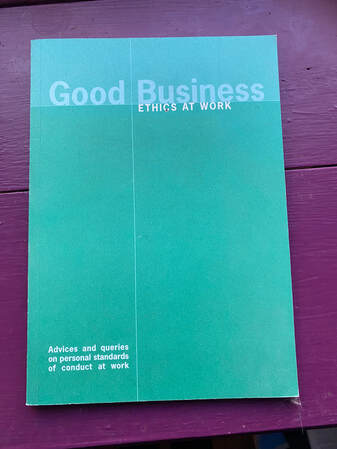
Quaker advice and queries on business.
It was a big leap to go into business running a gallery at the age of 23. The concept in my mind of being in business in the early 1990’s was not one I was entirely comfortable with. I considered myself primarily an artist, and have never been motivated by the idea of making money for the sake of it, and artist and business seemed at that time to be almost polar opposites. Looking around me for inspiration - I couldn’t find much. The galleries seemed to be run by old people (oh the irony!) And those with a very privileged or monied background (I hadn’t even got a degree in art and had no savings).
Business itself seemed to be all men in shiny suits flashing money and material goods around like toys. The women didn’t give me much inspiration either. Shoulder pads, heavy makeup and pencil skirts didn’t appeal to the soul of the old hippy in me. Neither did the idea of being cut throat, cold or making decisions purely based on a financial outcome. Selling myself as a mumpreneur or joining a woman in business group produced the ick in me. How would I align business with me? How could I become proud to call myself a businessperson? One of the main inspirations came one day when visiting an ancient quaker meeting house. There I found a thin green book about quaker business ethics. And although I’m not a quaker either, there was something here that spoke deeply to me, joining up community, purpose and ethical business I was suddenly on my way to creating my own vision.
​
Picture
Our 1st premises - a derelict youth club. We were there for 6 years - it's now Johnny Bagdad's cafe before moving in above the shop at the other end of the square.
Picture
Me aged 23
Picture
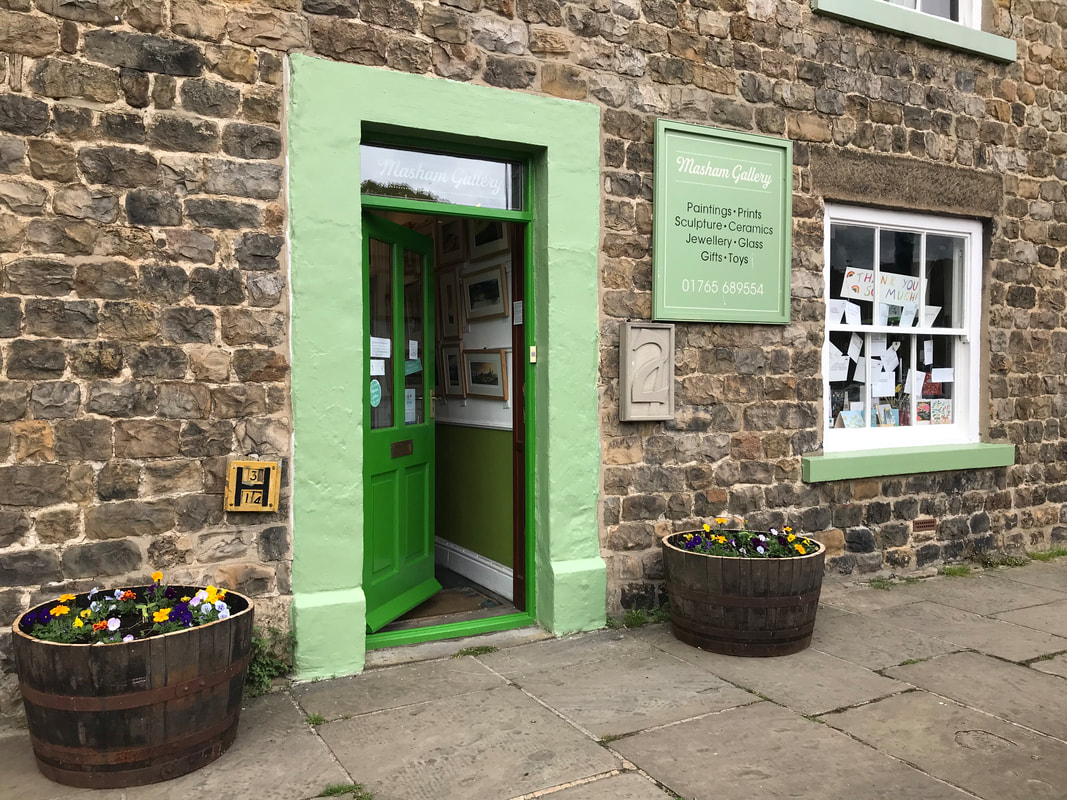
30 years on in Masham Gallery
Picture
A recent exhibition photo
The green book emphasised the importance of honesty, integrity, simplicity and equality. It discussed things such as ethical trade and environmental responsibility. I hadn’t come across this anywhere in business before and it made me realise I could align my personal values with my business and use it as a guiding force. This is still the core of the way I operate today and it has led to a happy life and a good business. I can be true to myself. It has meant that sometimes I have swum against the tide - in the early years I got quite a lot of hassle from customers who wanted plastic bags not paper for example. I never accepted the idea that a gallery should be a white walled cube, I wanted people of all walks of life to feel comfortable and at home here. Today many people mention they feel they are coming into our home, and they are as we live above the gallery. Being consciously part of a community is key for me. That’s not just the community where I choose to live and set up business it’s the community of artists and makers, the community of visitors, the community of people who work with me in Masham Gallery. Of course ideals and principles are not enough for a successful business, and the way this is all put into practice is important. Like all humans I’ve made plenty of mistakes and continue to do so. I think it’s an advantage of community though that I have mostly been lucky enough to have been forgiven and supported through them. 
I still try and balance my time between my artwork and running the gallery, and there’s still plenty to learn. Put it’s a privilege beyond words to still be doing what I love after 30 years and now I am proud to be both an artist and a businessperson. 

​Josie Beszant February 2024


​
0 Comments

Hibernating

3/1/2021

2 Comments

 
Picture

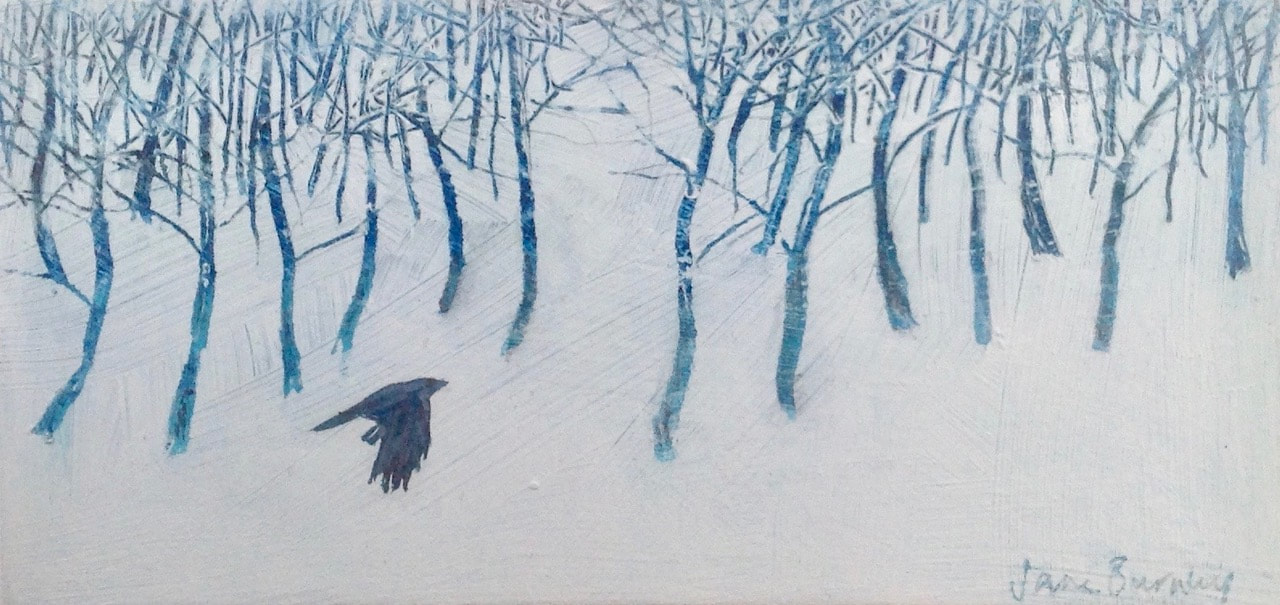
​"SILENCE BUT FOR THE SOUND OF SLOWLY BEATING WINGS (II)" BY JANE BURNLEY

2 Comments
<<Previous

    Josie Beszant

    Hello! welcome to the once a month (hopefully!) blog about reflections on running Masham Gallery and what it means from a personal perspective. I hope to get some guest bloggers in at a later date too. All feedback is welcome, thanks.

    Archives

    August 2025
    July 2025
    May 2025
    April 2025
    December 2024
    April 2024
    February 2024
    January 2021
    August 2020
    June 2020
    April 2020

    Categories

    All
    Artists
    Exhibitions
    Small Business

    RSS Feed

Welcome

Paintings & prints
Exhibitions - current
Exhibition archive
Ceramics & Sculpture
Glass & Wood
Gifts & home
Jewellery
Textiles


About Us

Books & films
Opening hours & contact
About us
Privacy Policy

Picture